Product development / In development
RD1 CRV Cowl Intake
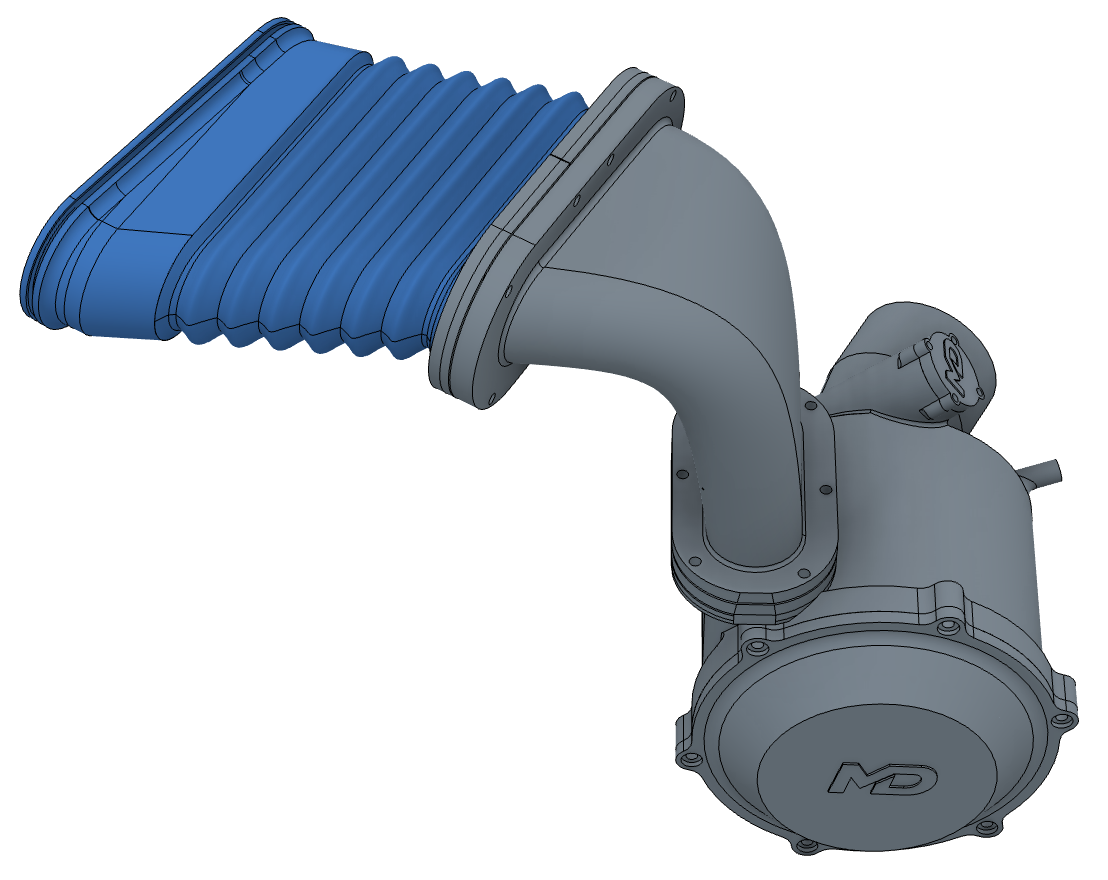
A closer look at a CAD assembly, from the curved duct and mounting flanges to the housing and fastener details.

A real problem behind the design
This project started after I hydrolocked my Honda CR-V’s engine while driving through water. That experience led me to rethink the intake location: I wanted to draw air from higher in the vehicle without installing a full external snorkel.
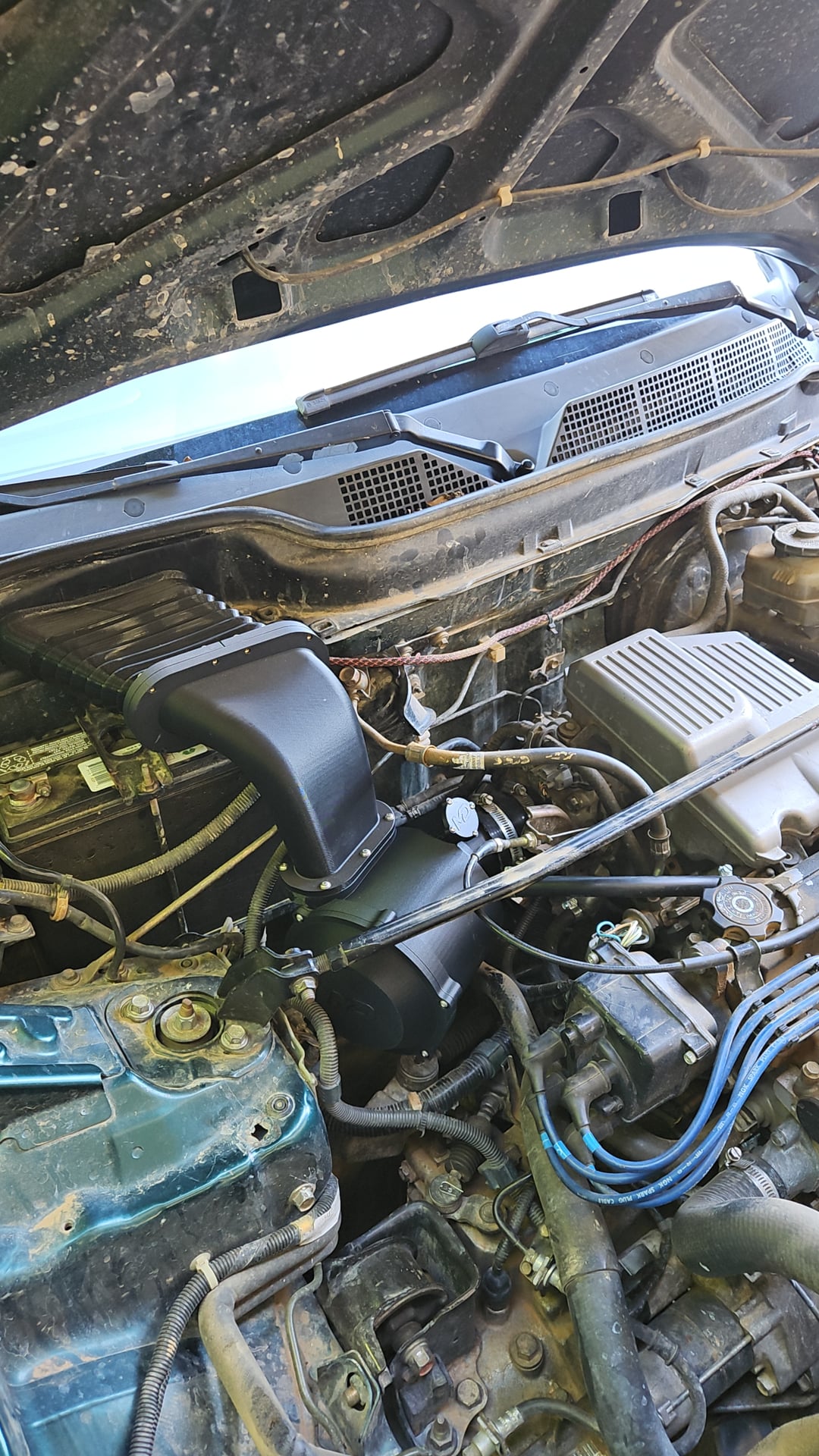
The result is a custom cowl intake developed around the available engine-bay space, with a duct and housing assembly that routes the intake toward the cowl area.
Scan first, design around the vehicle
I 3D scanned the engine bay to capture the surrounding geometry before building the CAD model. That gave me a reference for positioning the assembly, planning its routing, and checking clearances against nearby components.
Designing around the scan helped reduce reliance on manual measurements and repeated fitment guesses. It also let me address potential interference early, before committing time and material to printed parts.
Different materials for different jobs
The assembly combines materials selected for the demands of each component. I chose 64D TPU for parts that needed flexibility and the ability to handle engine-bay temperatures, and carbon-fiber-reinforced ASA (ASA-CF) for components that needed greater rigidity.
This approach let me balance compliance and structural support throughout the assembly, rather than asking a single material to do every job.
A higher intake, without a full snorkel
The design focuses on raising the intake location while keeping the assembly integrated within the vehicle. The CAD views show how the curved duct, housing, and bolted connections come together around that goal.
A higher intake location is only one part of managing water exposure. This project does not establish a safe wading depth or make the vehicle waterproof.